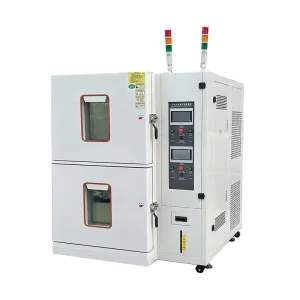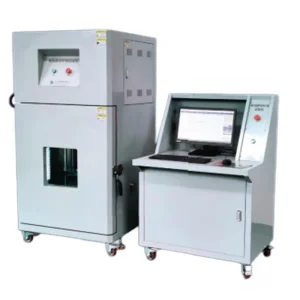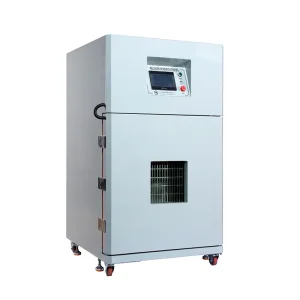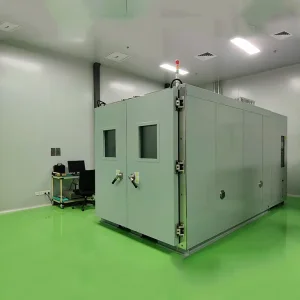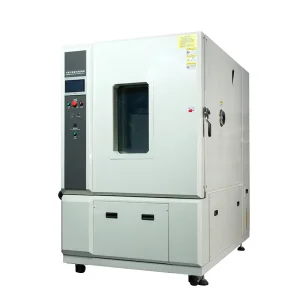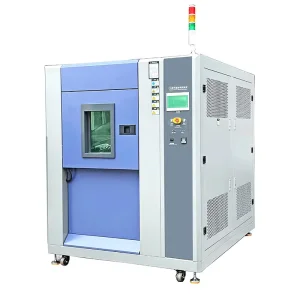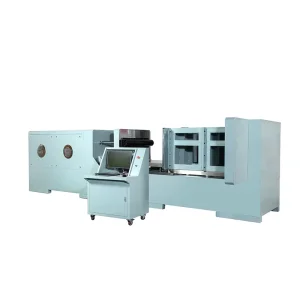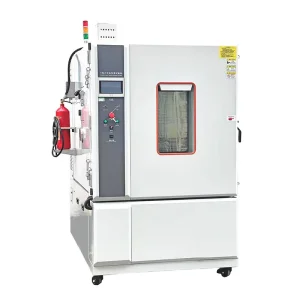
Explore our core product lines engineered to deliver real-time data capture, precise thermal diagnostics, and dynamic mechanical simulation.
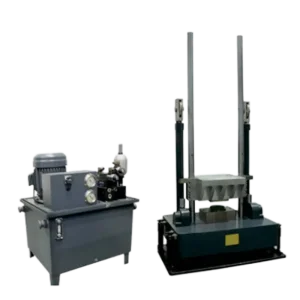
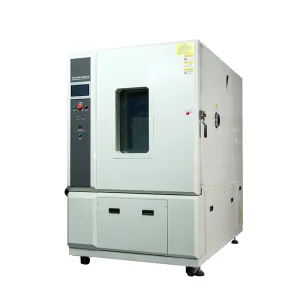
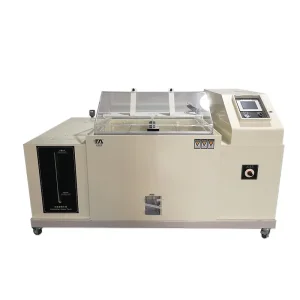
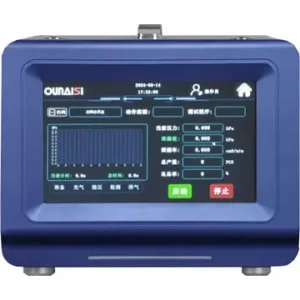
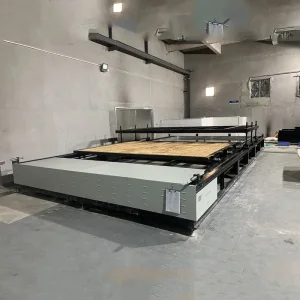
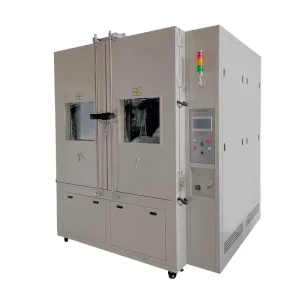
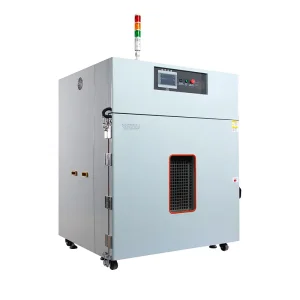
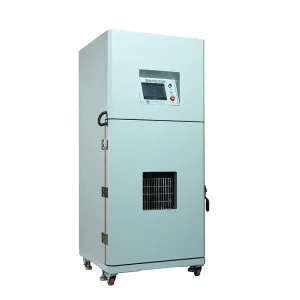
Taian Intelligent Equipment (Guangdong) Co., Ltd., situated in Qiaotou, Dongguan, was founded on March 10, 2017, with a registered capital of 12 million RMB. The company specializes in two major core sectors: environmental test equipment and safety test equipment. Through years of rigorous research, development, and industrial accumulation, we have evolved into a national high-tech enterprise integrating R&D, manufacturing, global sales, and comprehensive after-sales services.
By leveraging automated engineering and intelligent software, we bridge the gap in legacy laboratory operations, resolving issues like slow process efficiency, measurement errors, and safety hazards inherent in traditional manual systems.
Find Out More About Us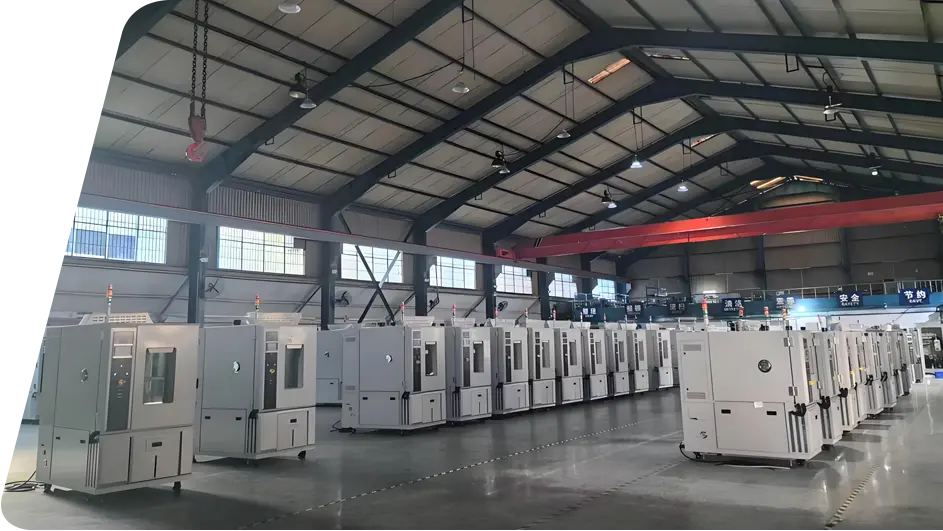
As the global automotive and grid storage sectors scale up battery energy densities, safety boundary verification has transitioned from passive observation to high-fidelity, real-time diagnostic recording. Under standard certification paradigms—such as UL 2580, UL 9540A, ECE R100, and GB 38031—battery packs and energy storage modules must undergo rigorous external fire exposure tests. The objective is to determine how the pack behaves under intense direct flame contact, measuring critical parameters such as structural integrity, thermal propagation latency, and gas emissions composition.
Traditional fire chambers simply subjected the sample to a burner and recorded pass/fail results via visual indicators. Today, a Real-Time Monitoring External Fire Tester acts as an integrated diagnostic laboratory, tracking internal cell voltages, multi-channel thermocouple readouts, gas release concentrations, and video feeds within an explosion-proof containment envelope. This enables developers to discover exact thermal runaway vectors and implement physical modifications before deployment.
Modern external fire testing systems rely on unified telemetry networks to gather physical, chemical, and thermal indicators simultaneously. The hardware design is segmented into three key domains:
Global regulatory bodies continue to tighten safety definitions. Industry standards require that any localized thermal runaway event does not propagate to adjacent cells or escape the battery pack envelope in a manner that endangers passengers or facilities. In response, laboratories in the North American, European, and Asian markets have prioritized continuous-telemetry instrumentation. Field reliability is no longer calculated merely by failure rates; it is evaluated through the exact timeline of containment, energy dissipation, and chemical release profiling.
Bridging hardware safety testing with digital intelligence to establish next-generation predictive battery safety models.
Integration of infrared thermography alongside high-speed visible spectrum cameras inside testing chambers to map heat propagation across the cell matrix in real time, detecting micro-venting anomalies prior to full-scale ignition.
By feeding empirical real-time monitoring test datasets into machine learning algorithms, we enable structural modeling engines to simulate pack deformation and gas exhaust behavior in digital twins prior to physical production.
Constructed with high-strength reinforced steel walls, safety release venting ports, automatic inert gas (nitrogen/argon) purge systems, and integrated water mist cooling lines designed to safeguard laboratory operators and assets.
The practical execution of external fire testing varies significantly based on industrial environments and installation parameters. We have customized our designs to fit diverse localized setups:
In product design facilities, the primary focus is data density. Engineers utilize high-channel thermocouple inputs to map localized thermal gradients within experimental cell arrays. Our systems deliver raw CSV outputs and real-time visualization graphs that sync with laboratory information management systems (LIMS) via Modbus, TCP/IP, or CAN bus interfaces.
At gigafactories, safety verification requires rapid-throughput validation options. Automated loading tracks transport battery modules directly into specialized fire-chamber envelopes, where standard fire scenarios are simulated. Highly responsive exhaust and scrubber interfaces process generated fumes without halting automated workflows.
Testing fully integrated multi-megawatt containerized Energy Storage Systems (ESS) demands robust, weatherized testing equipment. Outdoor installation systems are engineered with heavy-duty corrosion-resistant structures, wind shields to preserve flame shape, and safety interfaces that can be operated from control rooms located up to 100 meters away.
Operating from the industrial manufacturing hub of Dongguan, Guangdong, Taian Intelligent Equipment leverages a robust ecosystem of material sourcing, precision tooling, and control-hardware manufacturing. This localized cluster provides unique operational advantages:
Expert insights regarding calibration, standard compliance, and structural safety parameters of external fire testing systems.
Explore our comprehensive lineup of temperature, cycling, and mechanical destruction test units designed for lithium batteries and electronics.