
Choosing the right Rain Tester is critical for accuracy in testing materials for water resistance. A reliable Rain Tester provides essential data for industries ranging from textiles to electronics. According to a recent report by MarketsandMarkets, the global rain testing equipment market is projected to reach $480 million by 2025, reflecting the growing need for quality assurance.
Expert Dr. Emily Thornton, a leading researcher in testing technologies, emphasizes, "A precise Rain Tester can save companies from costly product failures." This highlights the importance of investing in high-quality testing equipment to ensure product durability. Many manufacturers underestimate the impact of improper testing methods, leading to failures and damaged reputations.
Understanding your specific needs is essential when selecting a Rain Tester. Factors such as test size, water pressure, and environmental conditions can greatly influence results. Some testers excel in controlled laboratory settings, while others are designed for field use. Inconsistencies can arise if users don't reflect on their operational requirements. Thus, careful consideration during the selection process can enhance the effectiveness of your testing efforts.
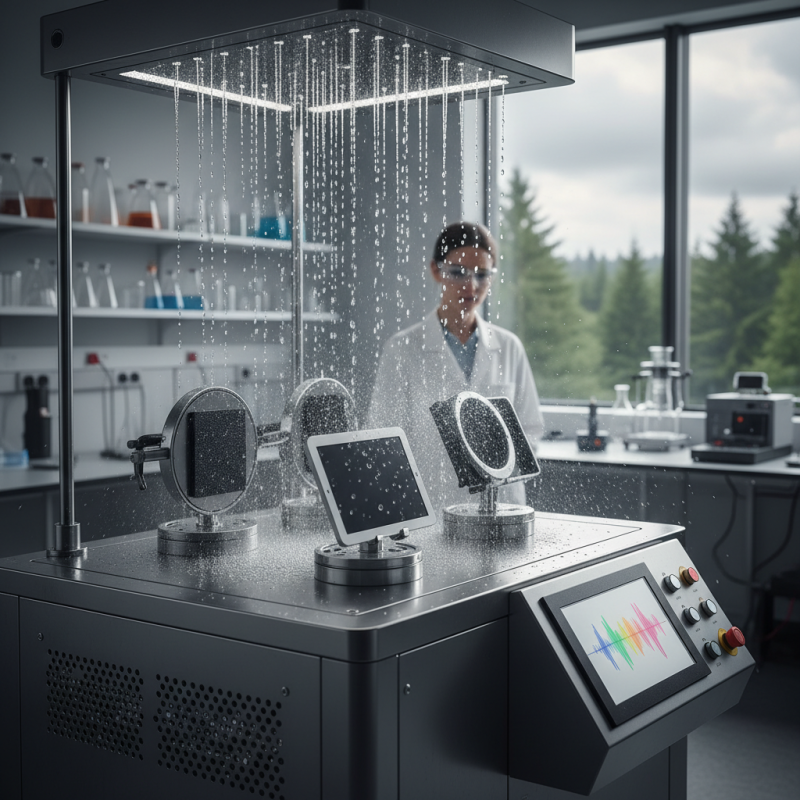
Rain testers play a crucial role in product development, especially for items exposed to the elements. They help assess water resistance and ensure durability. Choosing the right rain tester can enhance product reliability. It also reduces the risk of failures in real-world conditions. Adopting the correct method can streamline the testing process.
When selecting a rain tester, consider the specific needs of your product. Understand the environments it will face. You may want to test materials like fabrics, electronics, or coatings. Each material may require different testing methods. For instance, heavier fabrics might need more intense tests.
Tips: Look for testers that offer adjustable settings. This allows for varying intensities of rain. Also, analyze data from previous tests. This can provide insights into your product's performance. Remember, continuous evaluation is key. Reflect on the data you gather to improve future designs. This iterative approach leads to more resilient products.
Choosing the right rain tester requires careful analysis of its features. Rain testers are essential tools in industries such as construction and clothing manufacturing. A good rain tester should have precise water resistance measurements. Look for testers that measure in units like mm/hour, providing clear insights into product performance. Research shows that products rated above 2000 mm are typically considered waterproof.
Another critical factor is the tester's durability. Many testers are subjected to rigorous field conditions. Ensure your tester is resistant to environmental factors like UV exposure and temperature fluctuations. A report from the Materials Testing Institute indicates that nearly 30% of low-end testers fail after a few months of use due to material degradation.
Ease of use also impacts your selection. A complex device may provide accurate insights but could also frustrate users. Many professionals prefer compact designs that offer portability without sacrificing functionality. User reviews reveal that simplicity often enhances reliability in testing outcomes. Additionally, consider calibration requirements; testers needing frequent recalibration can be a hindrance in the field. Reviewing these details can help refine your choice for a rain tester that meets your specific needs.
When selecting a rain tester, it's crucial to understand the differences between laboratory and field models. Laboratory testers often provide precise control over conditions. They are ideal for standardized testing. According to the ASTM standard, these models simulate a variety of rainfall intensities and angles. They can measure water penetration accurately, offering reliable data on product performance.
Field testers, however, capture real-world conditions. They assess how materials hold up against unpredictable weather patterns. A study from the Journal of Testing and Evaluation indicated that field tests revealed vulnerabilities not seen in lab conditions. For example, wind-driven rain can expose weaknesses that stationary lab tests cannot replicate.
Manufacturers often debate the validity of laboratory results versus field results. While lab conditions offer replicable data, they can omit variables present in nature. Rainfall rates, temperature fluctuations, and humidity levels can vary drastically outdoors. This inconsistency may lead to misleading conclusions. Testing methods should be recognized for their limitations. Both types offer unique insights but lack a one-size-fits-all solution for every situation.
When selecting a rain tester, accuracy and reliability are paramount. A reliable device should consistently provide accurate measurements of rainfall. Calibration plays a critical role in this. Regularly check your tester against a known standard to ensure it's functioning correctly.
Tip: Use distilled water for calibration. It minimizes mineral buildup that can affect readings.
Different rain testers may have varied measurement scales. Ensure the device aligns with your specific needs. Some testers measure in millimeters, while others use inches. Choose one that suits your project requirements effectively. Consider the environmental conditions too. A tester may perform well in some climates but poorly in others.
Tip: Read product reviews from various sources. This feedback can highlight long-term reliability issues.
While high-tech gadgets offer advanced features, simpler testers can also be effective. Reflect on the trade-offs between features and ease of use. Not every feature is necessary for all users. Over-complicated devices might confuse rather than assist. Always prioritize what matters most to you in a rain tester.
Investing in a quality rain tester is crucial for industries relying on weather resistance assessments. A comprehensive cost-benefit analysis reveals that while initial investments can be higher, the long-term savings are significant. Research indicates that high-quality testers can last up to 10 years with proper maintenance. In contrast, cheaper options may need replacement every few years, leading to greater cumulative expenses over time.
Experts suggest a focus on durability and accuracy. According to a study by the International Weather Testing Institute, devices with advanced waterproof ratings often provide better performance data. These features ensure reliable results, reducing the risk of costly product failures. For instance, a tester that accurately measures water penetration can prevent material damage worth thousands of dollars.
Choosing a rain tester involves more than just initial cost. Consider the reliability of the results and long-term value. An investment in a robust device not only enhances testing accuracy but can pay off through reduced insurance claims and enhanced product reputation. It’s essential to analyze how often the device will be used and what savings on labor and materials might be achieved. Reflect on these factors to make an informed decision.
: Rain testers help assess water resistance and ensure product durability in real-world conditions.
Consider your product's specific needs and the environments it will face. Different materials require different testing methods.
Look for precise measurements in mm/hour and robust durability against UV exposure and temperature changes.
Heavier fabrics may require more intense testing methods to ensure reliability.
Analyzing past data provides insights into performance, helping to refine product development.
A simpler, compact design often leads to more reliable outcomes in testing, enhancing user experience.
Many low-end testers fail quickly due to material degradation, making quality essential.
Testers needing frequent recalibration can complicate field use, so consider this in your choice.
Yes, adjustable settings allow for varying intensities, tailoring tests to specific product needs.
Choosing the best rain tester for your needs involves a thorough understanding of its significance in product development. Rain testers play a crucial role in ensuring that products can withstand rain conditions, making it essential to select one that meets specific requirements. Key features to consider when selecting a rain tester include durability, ease of use, and the level of precision in measurements.
When comparing laboratory models to field testers, it is important to evaluate their respective applications and effectiveness in real-world scenarios. Accuracy and reliability of measurements are fundamental aspects that directly impact product performance assessments. Finally, conducting a cost-benefit analysis will help determine the long-term investment value in quality rain testers, ensuring that you meet your testing standards without compromising on performance.
